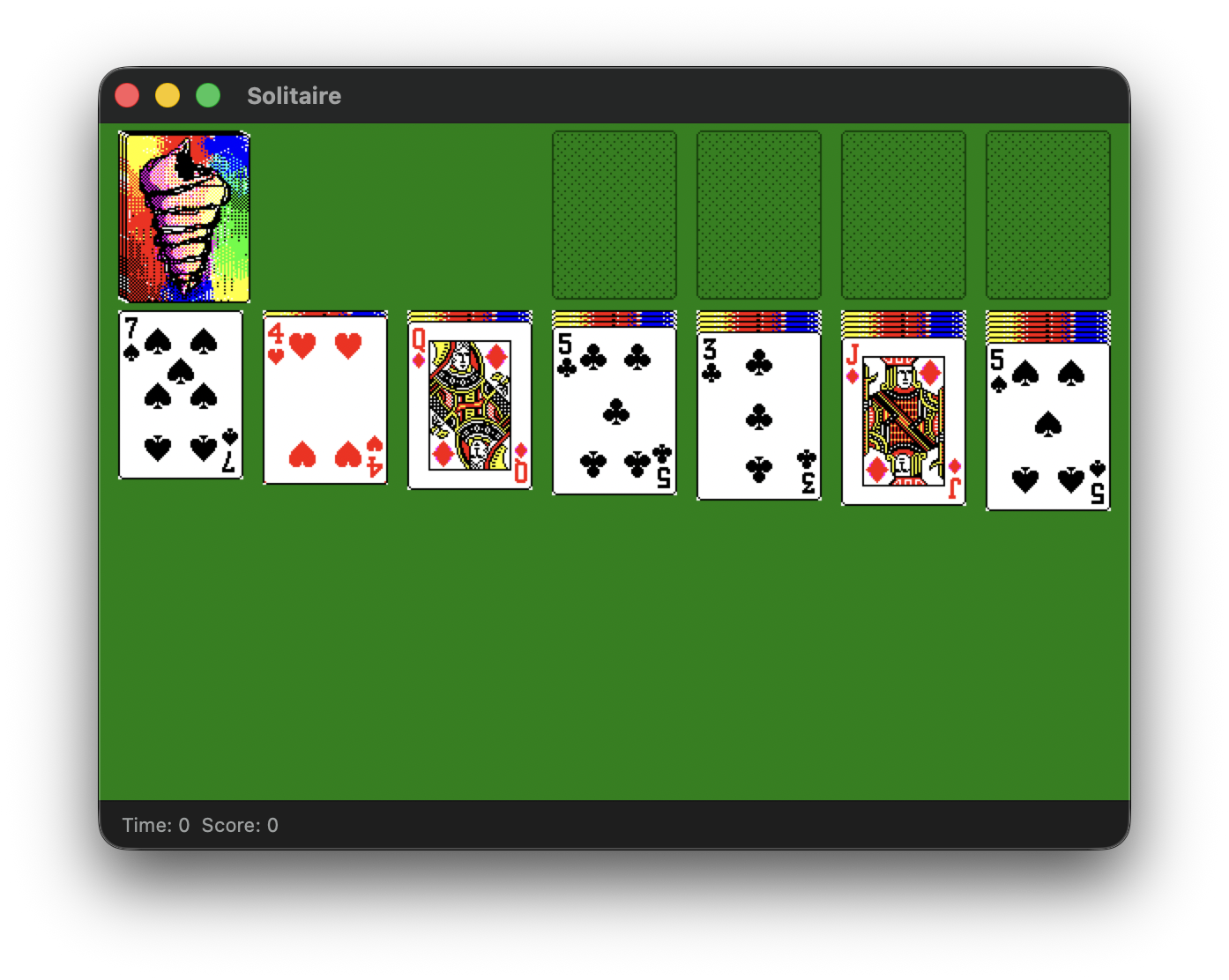
A cross-platform implementation of classic Klondike Solitaire built with C++ and wxWidgets. Runs on Windows, macOS, Linux, Android and classic Mac OS (68k and PowerPC).

- Windows:

- macOS:
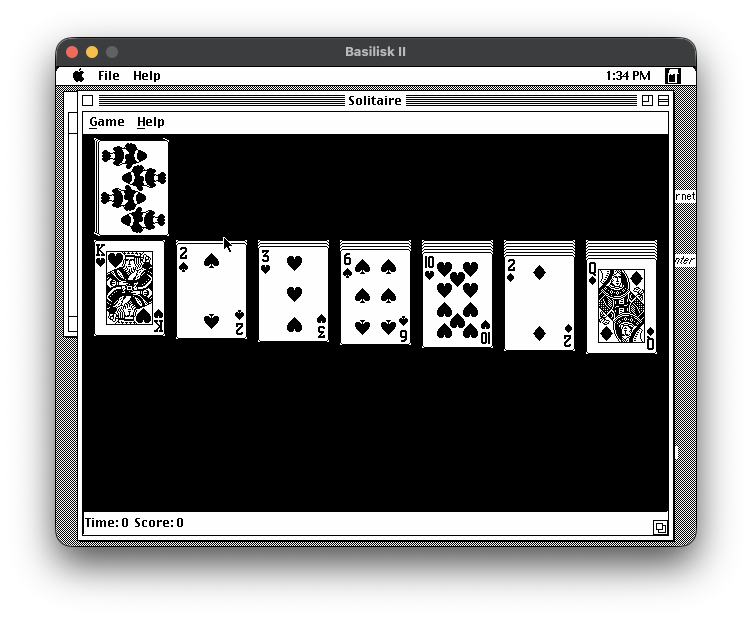
- Mac OS 7.5.X (m68k)
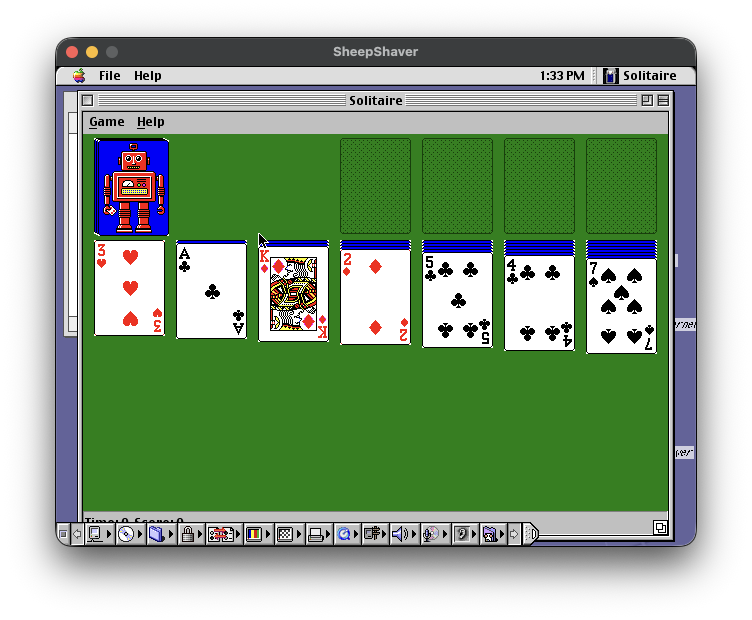
- Mac OS 9.X (ppc)
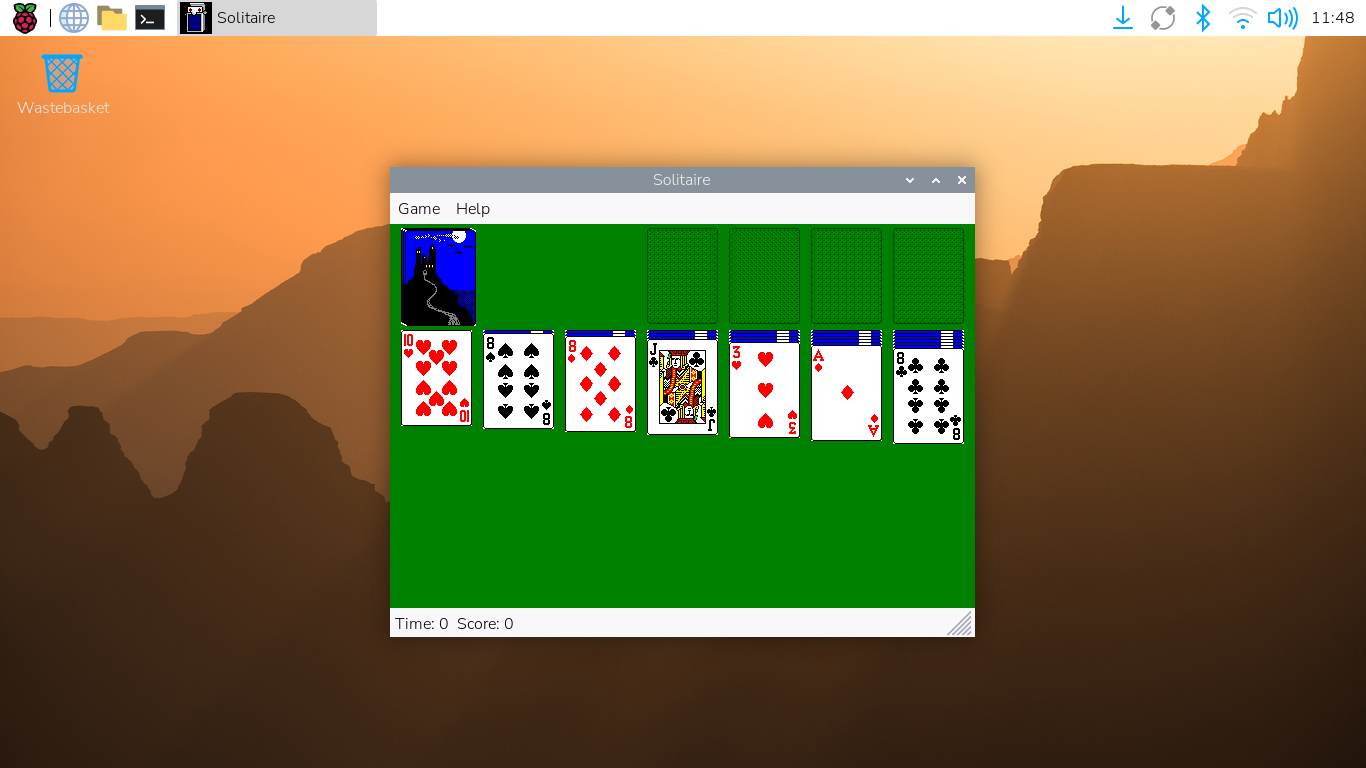
- Linux:
- Android:
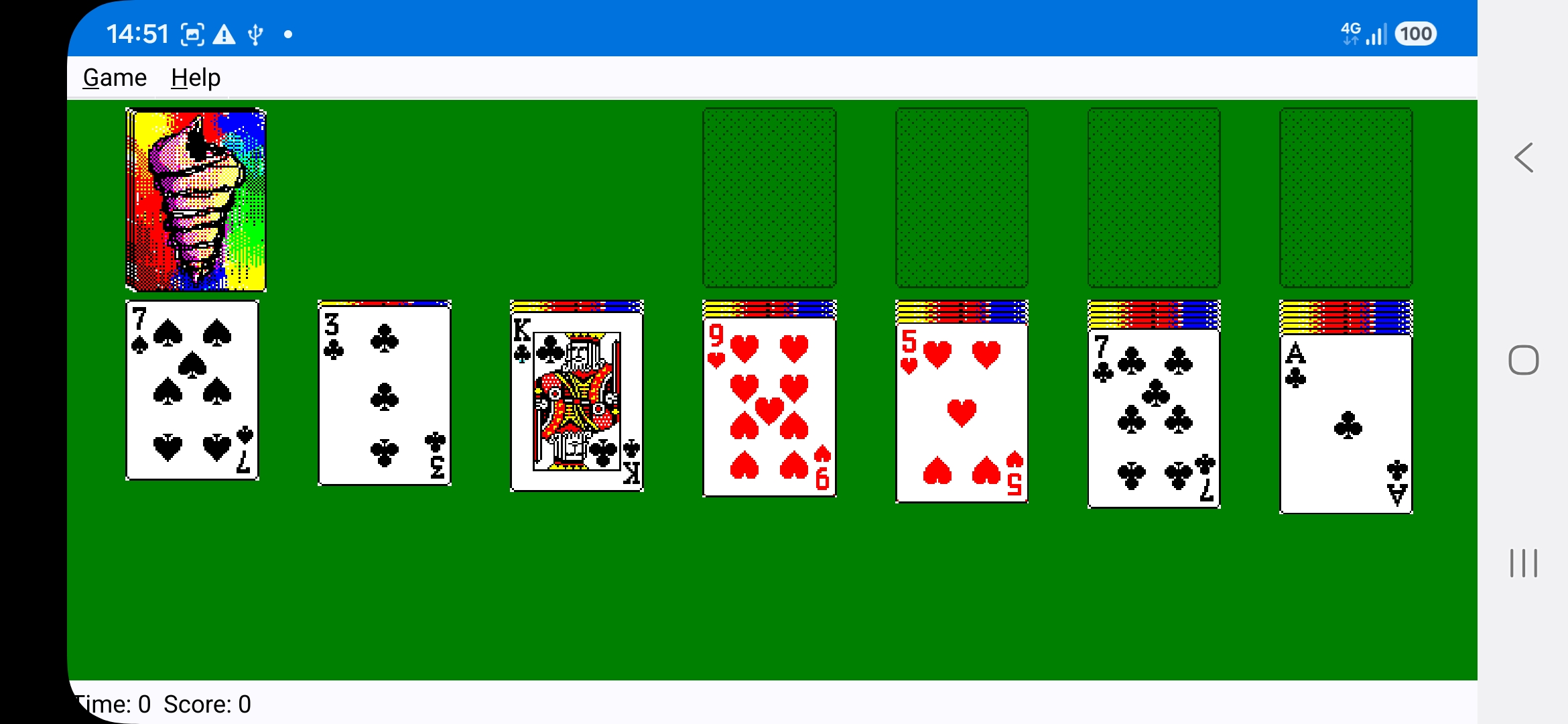
- Classic Klondike solitaire gameplay
- Draw one or draw three card modes
- Scoring modes: Standard, Vegas, or None
- Timed game mode
- Undo support
- Drag-and-drop with outline or full bitmap dragging
- 12 card back designs
- Keyboard navigation
- C++11 compiler
- CMake 3.14+
- wxWidgets (core, base, xrc, xml, html components)
mkdir build && cd build
cmake ..
cmake --build .
On macOS this produces a wxSolitaire.app bundle. On Windows it builds a GUI executable with the application icon and manifest. On Linux it builds a standard executable.
The Android build reuses the same C++ game code, compiled against the wxWidgets
Qt port (wxQt) that ships prebuilt inside the Qt 6.9.3 Android kit, and is
packaged into an APK with androiddeployqt.
Prerequisites:
- Qt 6.9.3 Android kit at
/usr/local/qt-6.9.3-android-arm64(with the wxQt static libraries) and the host Qt at/usr/local/qt-6.9.3 - Android SDK (with a build-tools + platform) and NDK, JDK 17+
- Host
wxrc-3.3(used to compile the card resources on the build machine)
Build and package a signed release APK:
cp android-signing.env.example android-signing.env   # then fill in your keystore
./build-android.sh
build-android.sh runs qt-cmake, builds libwxSolitaire_arm64-v8a.so, and
invokes the Qt apk target (which calls androiddeployqt). Signing uses your
existing keystore via the QT_ANDROID_KEYSTORE_* variables in
android-signing.env; without them the APK is left unsigned. The resulting APK
is printed at the end of the run (under build-android/.../outputs/apk/).
Built with the Retro68 toolchain
(installed in /opt/retro68) and its wxRetro68 port of wxWidgets, plus a host
wxrc:
retro68/build.sh # or: RETRO68=/path/to/retro68 retro68/build.sh out-dirThis builds the 68k and PowerPC applications and merges them into a single
fat application, build-retro68/Solitaire.dsk (an HFS disk image for
Basilisk II, SheepShaver, QEMU or a real Mac) and build-retro68/Solitaire.bin
(MacBinary). It needs System 7 or later with 32-bit QuickDraw. The help is
built in and shown in its own window. The classic Mac icons in
retro68/icons.r are generated from sizes/ by retro68/make-icons.py.
To test unattended in Basilisk II, build with tracing and run it from a copy
of a System 7/8 boot disk (BOOT_DISK, default ~/MacROM/HD.img; the
original is not modified):
SOLITAIRE_CMAKE_ARGS=-DSOLITAIRE_TRACE=ON retro68/build.sh build-trace
retro68/run-basilisk.sh build-trace/m68k/Solitaire.bin
The trace build logs its startup to wxtest.log and shuts the Mac down 25
seconds after its window appears; the script prints the log and keeps
screenshots in its work directory.
After building, install with:
cmake --install .On Linux the install includes a .desktop file and AppStream metadata for integration with desktop environments and software centres.
This project is licensed under the GNU General Public License v2.0.
The bin2c.c utility is licensed under the BSD 2-Clause license (copyright Rafael Kitover, 2016).